
- Teacher: Nic erupe
Moodle is an open-source Learning Management System (LMS) that provides educators with the tools and features to create and manage online courses. It allows educators to organize course materials, create quizzes and assignments, host discussion forums, and track student progress. Moodle is highly flexible and can be customized to meet the specific needs of different institutions and learning environments.
Moodle supports both synchronous and asynchronous learning environments, enabling educators to host live webinars, video conferences, and chat sessions, as well as providing a variety of tools that support self-paced learning, including videos, interactive quizzes, and discussion forums. The platform also integrates with other tools and systems, such as Google Apps and plagiarism detection software, to provide a seamless learning experience.
Moodle is widely used in educational institutions, including universities, K-12 schools, and corporate training programs. It is well-suited to online and blended learning environments and distance education programs. Additionally, Moodle's accessibility features make it a popular choice for learners with disabilities, ensuring that courses are inclusive and accessible to all learners.
The Moodle community is an active group of users, developers, and educators who contribute to the platform's development and improvement. The community provides support, resources, and documentation for users, as well as a forum for sharing ideas and best practices. Moodle releases regular updates and improvements, ensuring that the platform remains up-to-date with the latest technologies and best practices.
Links of interest:
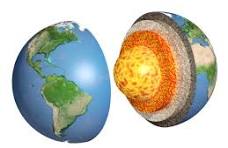
This course provides a foundational exploration of geophysics, the science of using physics to investigate the Earth's subsurface. Students will learn how subtle measurements of gravity, magnetism, seismic waves, and electrical properties can reveal hidden geological structures, from shallow aquifers to deep crustal formations.
The curriculum covers the core principles and applications of major geophysical methods, including:
Gravity Methods: Mapping subsurface density variations to locate ore bodies and geological structures.
Magnetic Methods: Detecting variations in the Earth's magnetic field to find mineral deposits and map igneous rocks.
Seismic Methods: Using sound waves to image subsurface layer geometry and properties, crucial for oil and gas exploration and engineering.
Electrical & Electromagnetic Methods: Measuring resistivity to locate groundwater, contaminants, and mineral resources.
Through a practical, hands-on approach on the Gnomio platform, students will learn not only the theory but also how to interpret geophysical data and select the right tool for real-world problems in exploration, environmental science, and engineering.